
Announcement
| Title | Description | |
|---|---|---|
| Early Career Scholars Writing & Publishing Programme – University of Nairobi | CALL OUT: AFRICAN LITERARY AND CULTURAL STUDIES PUBLICATION Applications are invited from early career scholars of African Literary and Cultural SOUTHERN AFRICA 11-14 AUGUST 2026, UNIVERSITY OF NAIROBI To be considered for the workshop, please submit to |
|
| Department to Hold Conference on 1960s - 1970s Eastern African Literary and Publishing Networks | The Department of Literature, University of Nairobi, in collaboration with the Department of English and Creative Writing, Exeter University, will host a conference on the role of publishing networks in Eastern Africa played in shaping the region's literary terrain in the vibrant decades of 1960s and 1970s.
The conference will take place from 10th - 11th August, 2026, at the Main Campus of the University of Nairobi.
Call for Papers: Eastern African Literary and Publishing Networks in the 1960s and 1970s Venue: University of Nairobi Dates: 10-11 August 2026
After political independence, during the early decolonial period, a significant number of new literary and publishing initiatives were founded in Eastern Africa due to the ‘flourishing, vibrant intellectual culture of the 1960s and 1970s’ with all the ‘major writers’ except for Ngũgĩ publishing with ‘local presses’ (Simon Gikandi & Evan Mwangi, 2007, p. 151). These initiatives redefined an African literary canon, more expansively drawing in oral literatures, popular genres, and African languages, and accepting work that would not have been published elsewhere. The 1962 ‘Conference of African Writers of English Expression’ held at Makerere University College in Kampala, alongside newly-established university colleges in Dar es Salaam and Nairobi, helped forge city-based creative hubs which attracted writers from other parts of the continent and supported the building of Eastern and Pan-African literary communities. Acknowledging that too little concerted conversation has been held to explore the impact of these literary and publishing networks in shaping African literatures, this conference draws together scholars working on this significant period in Eastern Africa’s literary history.
Through this dialogue, we want to explore questions such as: How did these literary and publishing initiatives emerge and how were they sustained? How did arts spaces, publishers and literary magazines in Eastern Africa support the work of writers in this period? What factors influenced publishing decisions? How important were changing educational structures and curricula to literary production? What were the interrelationships between independent African-owned publishing initiatives and international or government-owned publishers? What different geographical affiliations were brought together through writing communities and publishing initiatives (local, national, regional, Pan-African, international) in this period? How inclusive were these literary and publishing networks (particularly in relation to constructions of gender, sexuality, race and ethnicity)? What traditions did they destabilize or inaugurate? How can we better document and recognize the significance of Eastern Africa-based collaborative exchanges for an African literary canon?
We invite papers on topics that include but are not limited to:
Prospective speakers should submit a 300-word abstract of their proposed paper to nairobiliterarynetworks@gmail.com Please also include a brief biography (no more than 100 words) and contact information. Deadline for the submission of abstracts: 15 March 2026. Applicants will be notified no later than 30 March 2026. Registration will be free.
Linked to this event, conference organizers Godwin Siundu, Kate Wallis and Billy Kahora will be editing a new collection of essays focused around Eastern African Literary and Publishing Networks in the 1960s and 1970s. Conference speakers will also have the opportunity for their work to be considered for publication as part of this book.
As part of the conference we will also be hosting an optional workshop session on working with publishing histories and publishing studies methodologies
|
|
|
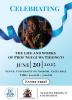
Celebrating the Life and Works of Prof. Ngũgĩ wa Thiong’o | The University of Nairobi, through the Department of Literature in collaboration with EAEP and the Ngũgĩ wa Thiong’o Foundation, invites the public to a commemorative event in honour of the late Prof. Ngũgĩ wa Thiong’o. 🗓 Date: Friday, June 20, 2025 Join us for a day of tributes, performances, readings, and exhibitions celebrating Prof. Ngũgĩ’s enduring literary and intellectual legacy. |
|
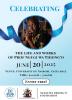
CELEBRATING PROF. NGUGI WA THIONG'O – JUNE 20, 2025 | Join us in honoring the life and work of Prof. Ngugi wa Thiong'o at a special event hosted by the Department of Literature University of Nairobi. The celebration takes place on June 20, 2025, at Taifa Hall from 9:00 AM to 5:00 PM. This event is dedicated to exploring the impactful contributions of Prof. Ngugi and his influence on literature, education, and empowerment. Enjoy a day filled with insightful discussions, commemorative activities, and a tribute to a literary icon. Entry is free for all attendees. Don’t miss this opportunity to be part of a meaningful celebration organized by the Ngugi Wa Thiong’o Foundation and the University of Nairobi. We look forward to welcoming you to this memorable event! |
|
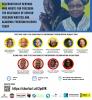
WEBINAR - CELEBRATION OF KENYANS WHO WROTE FOR FREEDOM | |
|
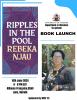
BOOK LAUNCH (RIPPLES IN THE POOL) | 🌟 Mark Your Calendars! 📅✨ Join us for a mesmerizing evening of literature and conversation at the launch of "Ripples in the Pool" by the esteemed Rebeka Njau. 🗓 Date: June 14, 2024 ⏰ Time: 6 PM - 8 PM EAT 📍 Location: Alliance Française, Utalii Lane, Nairobi 🤝 Co-sponsored by: University of Nairobi, Department of Literature and RMV-23 🔗 RSVP now to secure your spot: https://www.eventbrite.com/e/899220431517?aff=oddtdtcreator Spread the word and bring a friend! Let’s make this a night to remember! 📚🎉 |